

There’s been a lot written about the lessons of President-elect Barack Obama’s “Triple O” Internet campaign for marketers, but little on lessons for media and journalists.
But that’s about to change because the Carnival of Journalism is rolling into November with that topic in its big tent. All of this month’s carnival posts are linked from sideshow barker Adam Timworth’s blog.
Did Obama win because he had an iPhone app as the Geek Cowboy facetiously asked? No, but the combination of strategies used by his Internet team, dubbed “Triple O,” is as likely to change national politics as fireside chats during World War II and television debates in the 1960s, some say.
I noticed five Web 2.0 strategies (we can still use that term, right) that the campaign of Obama executed or exploited better than most news media do – and none of are new discoveries from the wilds of the Web. “They’ve taken all our stupid ideas and made them smart,” Zephyr Teachout, who ran Howard Dean’s online organizing in 2004, told Salon.
Here’s my five Ws for Web 2.0 or social media journalism from the Obama campaign:
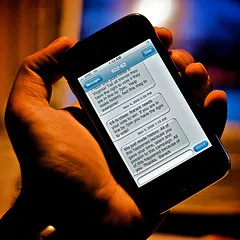
1) Mobile text and email strategy: The campaign built a formible opt-in SMS text database (its size seems to be a closely guarded secret) and had a sophisticated email marketing strategy around 10 million e-mail addresses that adjusted the times emails were sent to times the recipients typically opened emails. It had a mobile site and a free iPhone app. It’s text messages, geocoed to area code, often included the viral suggestion of “please fwd this message.” You may remember that he announced his VP choice of Joe Biden by SMS about 3 million phone numbers, but what worked was thousnda of register to vote and get out the vote texts. Are you aggresively growing your SMS and email databases?
2) YouTube and video: The Obama campaign poured more resources video than any presidential campaign. He will become the first president to put his Saturday addresses on YouTube. They were still doing radio addressess only in 2008? Remember, YouTube did not exist in 2004. By 2008, Musician will.i.am’s independent video in support of Obama “Yes We Can” has been seen more than 15 million times. Nearly 2,000 videos have been uploaded by the campaign to YouTube. Are you saying “Yes We Can” to YouTube as a video platform?
3) Effectively using customer databases: If you work for a U.S. media company, Barack Obama’s campaign database wizards likely know more about your readers or viewers than the editor or the news director. They’re likely to know if someone in your market is a reader or viewer. They know where many vote, what their phone number is, how they are likely to vote and how often they’ve accessed the campaign’s social networking site, if ever, My.BarackObama.com. They know how many children there are in the family and what magazines and catalogs you get or cable news shows you watch. Despite heaps of data and study after study, is your news organization effectively using any demographic data to better serve and to tap new readers or viewers? Be honest!
4) Be where the users are: The Obama campaign were following about 130,000 people on Twitter and had nearly that many following its Tweets. The campaign has profiles Facebook, MySpace, flickr and as many as 16 sites. How many social networks is your news oragnizaiton on and has it done anything with them since signing up?
5) Enable the community. The Obama online campaign was focused at using online tools to get offline results, get people to volunteer to man a phone bank or go door-to-door or show up at an event. Are you using online media to mobilize your content consumers in either online or offline ways?
Some links that I found interesting while researching this post:
- blackrimglasses - What the Obama campaign could teach the record business
- Text-Friendly Hopefuls Vie For Hearts And Thumbs - washingtonpost.com
-
[Barack Obama Vs. John McCain Social Media and Search Engine Scorecard Adult ADD Strengths](https://adultaddstrengths.com/2008/11/05/obama-vs-mccain-social-media/) -
[MoJo DoJo Obama campaign’s text/mobile effort: A model for newsrooms?](https://blogs.courierpostonline.com/mojodojo/2008/11/03/obama-campaigns-textmobile-effort-a-model-for-newsrooms/) - Technology Review: How Obama Really Did It
-
[Heather McRobie: Barack Obama’s win was due, in large part, to the youth vote. Maybe now people will stop accusing us of apathy Comment is free guardian.co.uk](https://www.guardian.co.uk/commentisfree/cifamerica/2008/nov/11/voterapathy-youngpeople) - Lessons in SMS marketing from the Obama campaign :: BtoB Magazine
- Obama to post weekly address on YouTube : Gina Hughes : Yahoo! Tech
-
[Huffington Post Jonathan Spalter: Obama’s Mobile Moment](https://www.huffingtonpost.com/jonathan-spalter/obamas-mobile-moment_b_120819.html) -
[Washington Post Obama’s Wide Web](https://www.washingtonpost.com/wp-dyn/content/article/2008/08/19/AR2008081903186_pf.html/) -
[What Next for Obama’s Text-Messaging Database? The Trail washingtonpost.com](https://voices.washingtonpost.com/the-trail/2008/11/02/what_next_for_obamas_text-mess.html) -
[Obama’s use of technology didn’t end with vote National Chron.com - Houston Chronicle](https://www.chron.com/disp/story.mpl/nation/6102843.html) - The Medium - Clicking and Choosing - The Election According to YouTube - NYTimes.com
-
[TechCrunch Is Obama Ready To Be A Two-Way President?](https://www.techcrunch.com/2008/11/15/is-obama-ready-to-be-a-two-way-president/) - geek cowboy: Obama Won Because He Had An iPhone App
-
[Will Social Media Replace TV, Radio & Newspapers? Ari Herzog, AriWriter](https://www.ariwriter.com/2008/11/will-social-media-replace-tv-radio-newspapers/) -
[Barack Obama’s super marketing machine Salon News](https://www.salon.com/news/feature/2008/07/16/obama_data/) - Obama’s Social Media Advantage, Act II - ReadWriteWeb
- Obama’s Social Media Advantage - ReadWriteWeb
-
[Marketing lessons from Barack Obama The Responsible Marketing Blog](https://responsiblemarketing.com/blog/?p=679) - Ruminating Shit: 10 lessons for marketers from Barack Obama
-
[6 B2B Marketing Tips Courtesy of McCain & Obama B2B B2G MarCom Minute Blog](https://www.marcomink.com/blog/2008/11/04/6-b2b-marketing-tips-courtesy-of-mccain-obama/)
Links collected with Publish2 Photo by Cazimiro, used under Creative Commons terms.